Buying a plot is a big milestone. You may be planning to build your family home, invest for the future, or simply own a piece of land you can call your own.
But before you pay an advance or sign an agreement, there are a few checks worth making first.
Unlike buying a ready-to-move-in home, purchasing land involves verifying not only the location and price, but also the ownership records, approvals, land use, access and physical boundaries.
If you are wondering what to check before buying a plot in India, this simple checklist will help you know where to start.
A Quick Plot-Buying Checklist
|
What to check |
What you are confirming |
|
Property title |
The seller has the legal right to sell |
|
Encumbrance Certificate |
Registered transactions affecting the property |
|
Land use & approvals |
The land can legally be used as intended |
|
RERA status |
Applicable project registration and disclosures |
|
Survey & boundaries |
The documents match the actual plot |
|
Access & infrastructure |
The plot is practical to use |
|
Sale & records |
The transaction is properly documented |
1. Verify the Seller and the Property Title
Start with the most important question: does the seller have the legal right to sell this land?
Ask for the property’s title documents and check how ownership has moved from one owner to another over time. This is commonly referred to as checking the chain of title.
Details such as the owner’s name, survey number, property description, area and boundaries should be consistent across the relevant documents.
If you are buying from a developer, also verify that the company or authorised representative has the right to sell that particular plot.
Because title issues can become complicated, having an independent property lawyer or qualified document professional review the records before you commit can be worthwhile.
2. Check the Encumbrance Certificate and Outstanding Dues
An Encumbrance Certificate (EC) is another important document to check before buying land in India.
It can show certain registered transactions connected with the property during the period searched, such as earlier sales or registered mortgages.
However, an EC should not be treated as a guarantee that the property has a completely clear title. Some claims, disputes or unregistered arrangements may not appear in it.
That is why an EC should be checked along with the title documents, not instead of them.
You should also ask whether applicable property taxes, development charges or other dues relating to the property are up to date.
3. Confirm the Land Use and Required Approvals
A plot may be advertised as “residential”, but you should still verify whether the official land-use classification allows residential development.
If the land was previously classified for agricultural or another type of use, check whether any required conversion or change in land use has been completed.
For a plotted development, verify whether the layout or development has received the necessary approval from the relevant planning or development authority.
The exact approvals, authorities and terminology vary across Indian states and cities. For example, the planning authority that matters in Tamil Nadu will not necessarily be the same as the authority in Karnataka, Telangana or another state.
So avoid relying only on phrases such as “approved plot” in an advertisement. Ask which authority approved it and what exactly was approved.
4. Check RERA Registration Where Applicable
If you are buying in a plotted development, check whether the project falls under the requirements of the Real Estate (Regulation and Development) Act, 2016 (RERA).
Where RERA registration is required, the relevant state RERA portal can help buyers review information such as the promoter, project registration and disclosed approvals.
However, not every individual plot sale or development necessarily requires RERA registration. Applicability can depend on the nature and size of the project and other legal factors.
Think of RERA verification as one part of your plot purchase legal verification checklist, not as a substitute for checking the title, land use and other documents.
5. Match the Documents to the Actual Plot
Good paperwork is only useful if it matches the land you are actually buying.
Before making your decision, verify details such as:
· Survey number or relevant land-record reference
· Plot number
· Total area
· Plot dimensions
· Physical boundaries
· Road frontage and access
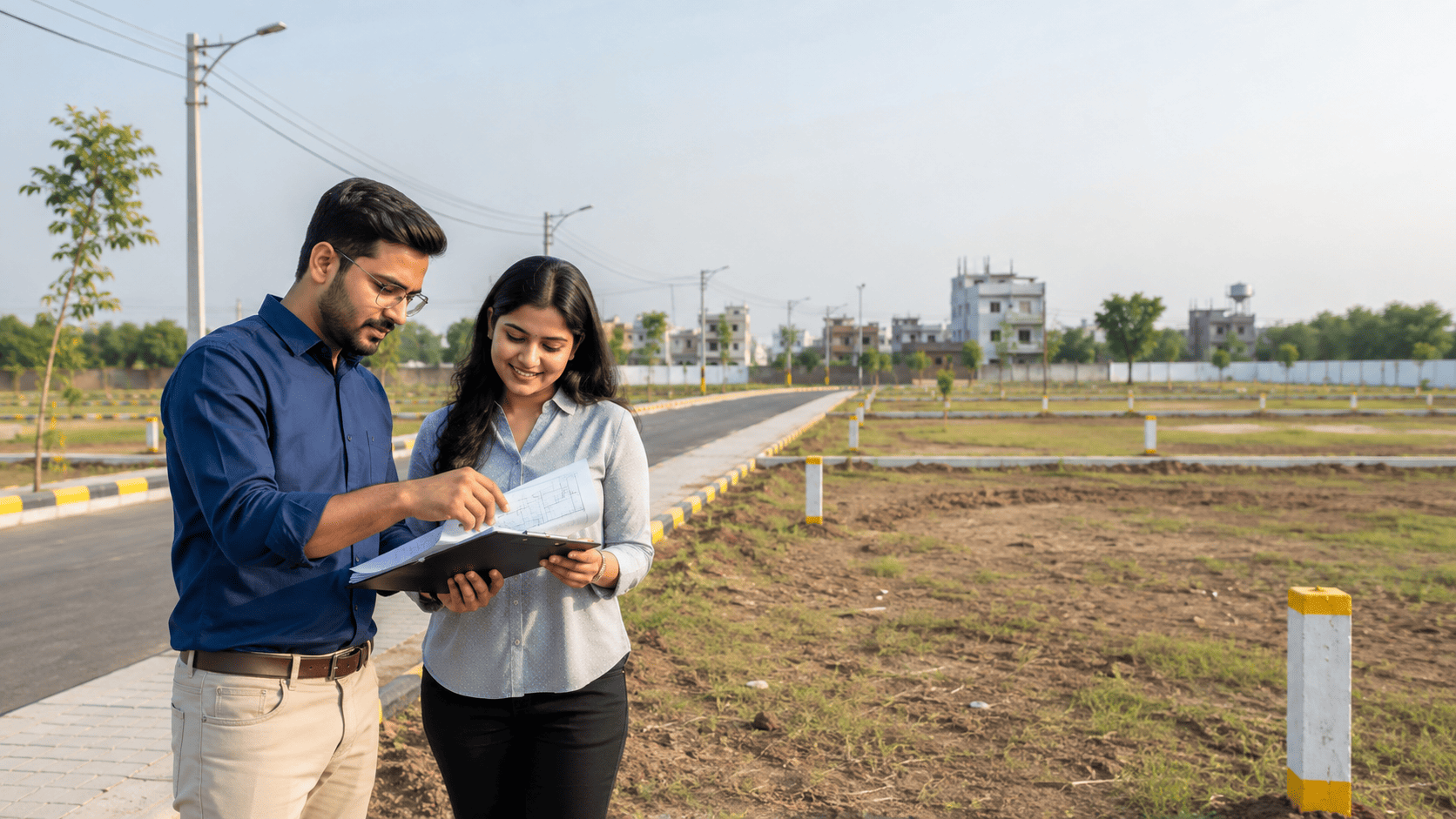
Visit the site and make sure the plot shown to you corresponds with the documents.
If there is any uncertainty about the measurements or boundaries, consider having the property surveyed by an appropriately qualified professional.
Also pay close attention to access. A plot should have clear, legally recognised access to an approved or public road rather than depending only on an informal route through another property.
6. Inspect the Location and Infrastructure Yourself
The documents may be in order, but the location still has to work for you.
Visit the site and look at the actual condition of the area. Check road access, drainage, water availability, electricity access and the level of surrounding development.
Also consider everyday connectivity to schools, hospitals, workplaces, public transport and essential services.
If you are buying mainly as an investment, look at future infrastructure plans carefully, but do not base a major financial decision only on marketing promises such as “upcoming highway”, “future metro” or “fast-developing area”.
Whenever possible, verify such claims through official planning or infrastructure sources.
7. Review the Agreement, Registration and Post-Purchase Records
Before paying a substantial advance, read the agreement carefully.
Make sure the property details, agreed price, payment schedule, responsibilities of each party and conditions for completing the sale are clearly recorded.
The final transfer is generally completed through the appropriate sale deed and registration process, with applicable stamp duty and registration charges.
But remember: registration by itself does not automatically prove that the seller had a perfect title to the land. That is why the legal and document checks should happen before registration.
After the sale, also check whether the relevant municipal or revenue records need to be updated in your name.
Depending on the state, you may hear terms such as mutation, patta, khata or revenue-record transfer. These processes and names vary by location, so check the requirements that apply to your property.
Take Your Time Before You Buy
Buying land is exciting, but it is also a decision worth slowing down for.
A good plot is not only one with the right location or price. The ownership, approvals, access, records and physical details should all make sense together.
At Sreenivas Housing, we believe buyers should understand what they are purchasing before making an important property decision. Ask questions, examine the documents, visit the site and verify the details rather than relying only on promises.
The right checks at the beginning can make the journey from buying a plot to building a home much more confident.
Official Resources to Check
· Relevant State RERA Authority
· State Registration Department
· State Land Records or Revenue Department
· Local Planning or Development Authority
Property laws, approval requirements and land-record procedures differ between Indian states and local authorities and can change over time. This article provides general information only. Buyers should verify current requirements with the relevant government authorities and consider independent legal or professional advice for a specific property transaction.
Featured Image Credit: AI-generated illustration